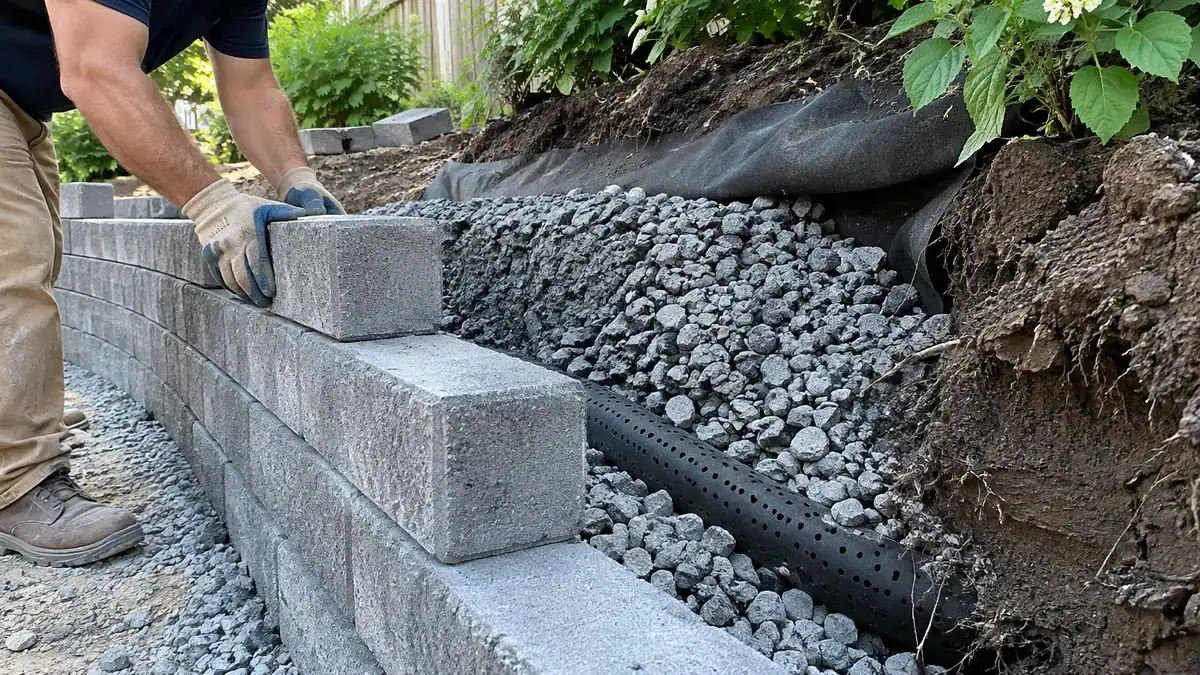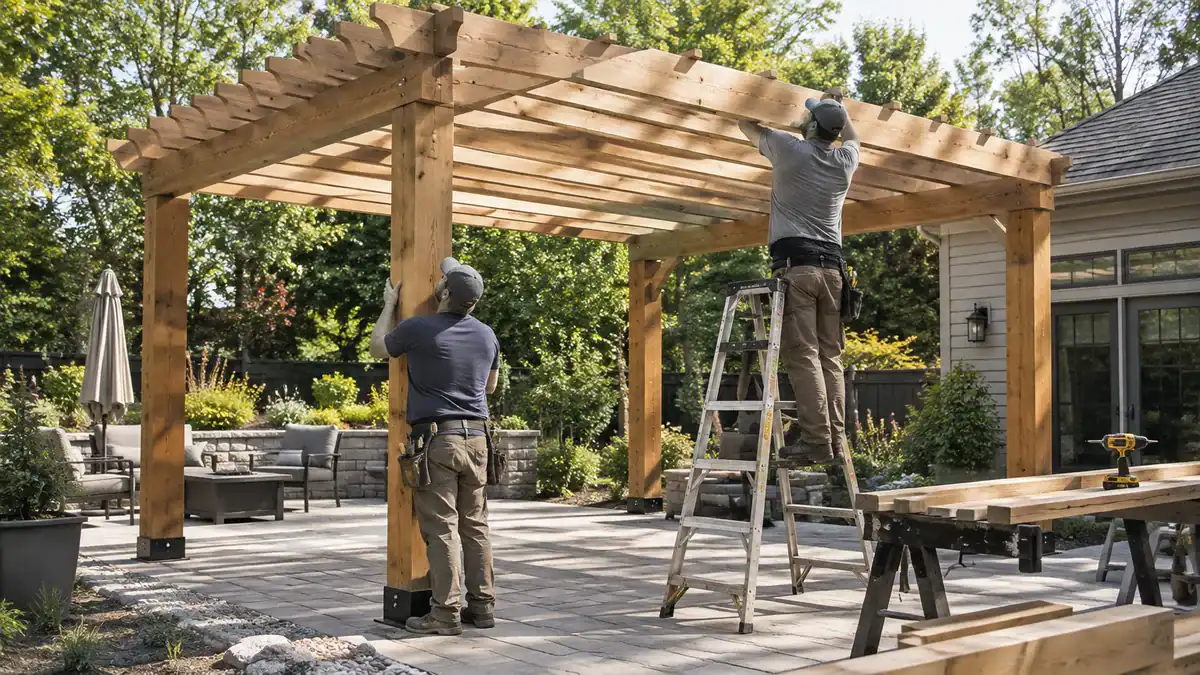
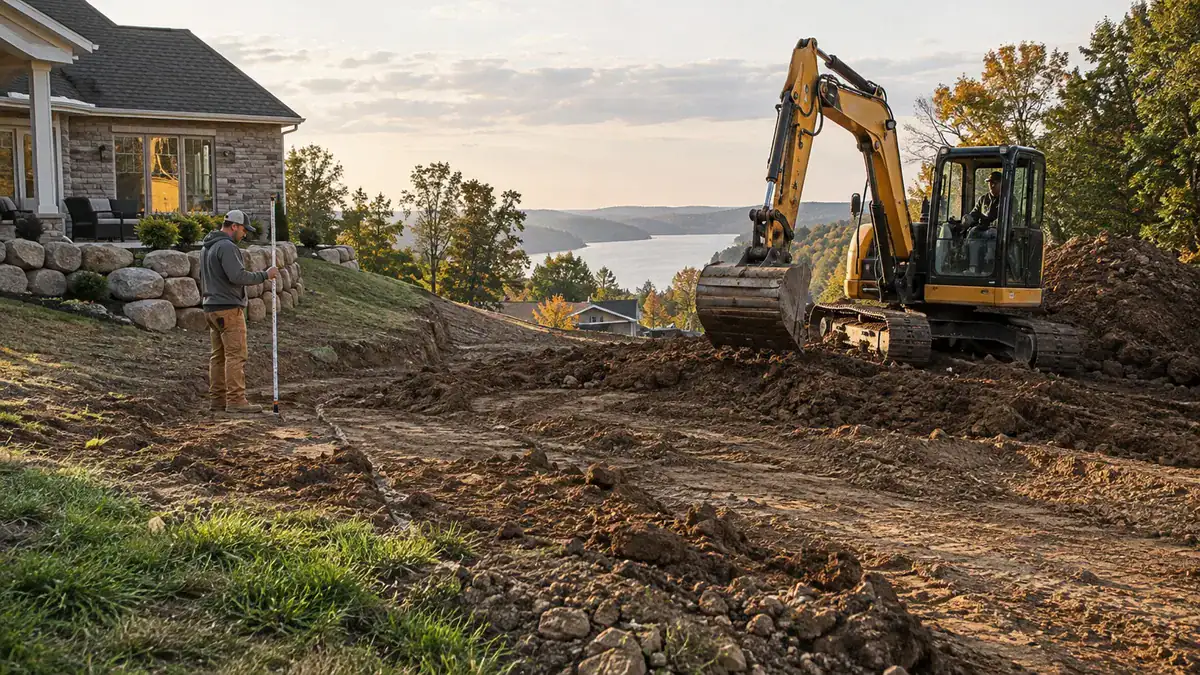
Landscape grading typically costs $500 to $5,000, with a national average near $2,300. Your site’s slope, soil, access, and finish requirements determine where your estimate falls. Rough grading, which shapes the ground, is often estimated at $1 to $2 per square foot. Finish grading, which prepares the surface for planting or other landscape work, is often $0.40 to $1 per square foot.
Grading does not necessarily mean making your yard flat. It establishes elevations and slopes suited to how you plan to use the space, support construction, and manage water. A patio, retaining wall, lawn, or full backyard remodel may each require different earthwork and finish details. Broad cost ranges are a useful starting point, not a site-specific quote. For a realistic budget, assess the land alongside the landscape or outdoor-living project it needs to support.
Key Takeaways
- Landscape grading commonly costs $500 to $5,000, with a national average near $2,300, while reported project costs range from $200 to $10,000 depending on the scope and site.
- Rough grading typically costs $1 to $2 per square foot, and finish grading typically costs $0.40 to $1 per square foot, but those broad rates may not reflect soil handling, access, or finish requirements.
- Your grading estimate depends on slope, soil conditions, cut-and-fill volume, equipment access, water-flow goals, and features that need protection, so an on-site assessment can clarify the work required.
- Compare written estimates by checking whether each includes rough and finish grading, soil import or hauling, cleanup, feature protection, and restoration, and coordinate finished elevations with planned patios or other landscape features.
How Much Does Landscape Grading Cost?
Landscape grading commonly costs $500–$5,000 nationally, but the price for your site depends on the amount and type of earthwork required. HomeGuide’s January 2026 guide puts the national average at $2,300 and reports project costs from $200 to $10,000. This wide range reflects differences in project size and scope.
The estimate also depends on what “grading” includes. Rough grading reshapes the ground to establish planned elevations and slopes. Fine, or finish, grading prepares the surface for landscaping, such as planting or installing a lawn. Grading creates a surface suited to your project. It does not automatically mean leveling the yard into a flat plane.
Rough grading is estimated at $1–$2 per square foot and fine or finish grading at $0.40–$1 per square foot. These are broad estimates, not a calculator for every site. Square-foot pricing alone may not account for soil conditions, equipment access, hauling material away or bringing it in, or the level of detail needed for the finished surface.
Angi estimates professional yard grading at $1,020–$3,335, with labor around $50–$100 per hour and most projects taking 12–24 hours. The difference between Angi’s range and the wider national figures reflects variations in project scope and how costs are presented. A straightforward grading job and a larger project with more earthwork or finish requirements will not have the same estimate.
When comparing estimates, look beyond the total and per-square-foot rate. Check whether the proposed work covers rough grading, finish grading, or both, and whether the scope accounts for your site’s conditions. Two estimates for the same yard may differ because they include different amounts of preparation or finish work, even when both refer to landscape grading.
What Changes a Grading Estimate?
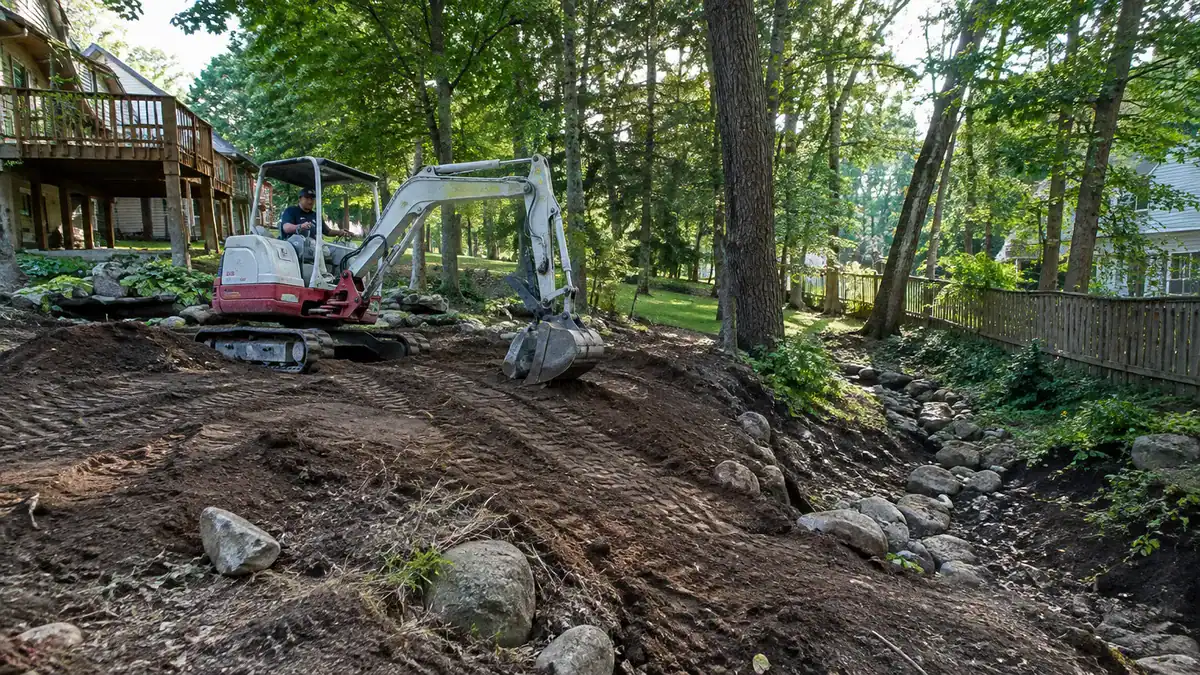
A grading estimate depends on your yard’s size and slope, the volume and location of soil to move, ground conditions, water-flow goals, and features that limit excavation. Yard area alone does not show how much earthwork a project needs. A broad, shallow adjustment may require less soil movement than a smaller area with a pronounced elevation change. The location of cut and fill also matters, since moving soil from one part of the yard to another requires a plan for both areas.
Your intended landscape or outdoor-living layout determines the grading goals. For example, your design might need a stable, gently sloped area for seating while preserving a different elevation for planting beds. Grading sets ground elevations and directs water flow. It is not simply about flattening the yard. The plan must account for where water should travel and how the finished contours will fit with paths, planted areas, and structures.
Soil type, compactness, and moisture affect how readily crews can excavate and shape the ground. Dense or rocky soil can take more effort to cut, while loose or recently placed soil may need careful shaping and compaction to support the planned surface. Wet ground can also affect how workable the soil is during excavation and finishing.
Existing site features can require protection or limit where equipment can work. Foundations, established trees and planting, retaining walls, paving, and underground utilities may require careful planning around excavation and elevation changes. A grading plan that protects these features can involve more detail than work in an unobstructed area.
Steep or uneven sites often require more precise planning and earthwork than a light surface adjustment. The design must coordinate changes in elevation with how you intend to use the space and the surrounding ground. When grading supports a larger backyard remodel, aligning finished elevations with the next construction and landscape phases helps create a cohesive result.
How Do Soil, Hauling, and Access Affect Cost?
Cut-and-fill volume, soil handling, and equipment access affect landscape grading costs because they determine how much material crews must move and how they can reach the work area. Cut is soil removed from a higher area; fill is soil placed in a lower area. The amount of each, and the distance between the cut and fill areas, influence the labor and equipment needed.
When your site needs more soil to achieve the planned elevations, importing suitable material adds work, including delivery and placement. If excavation leaves more soil than the site can use, loading and hauling the excess adds to the scope. Your estimate should account for whether soil will stay on the property, be brought in, or be removed, rather than assuming every yard can balance its own cut and fill.
Soil conditions and moisture affect how readily the ground can be excavated, moved, and shaped. Compact or rocky ground, for example, may take more effort to work, while wet soil can be harder to handle and finish neatly. These conditions can change the work sequence and the equipment that makes sense for your site.
Narrow gates, stairs, retaining walls, and nearby buildings can restrict where machinery can travel or operate. Limited access may call for smaller equipment, more careful maneuvering, or additional manual work. Protecting a finished patio or lawn also takes planning, since equipment movement and soil storage must avoid damaging surfaces that will remain.
Existing plants, turf, patios, and other hardscape may need protection, removal, or restoration. Keeping a planting bed intact requires different care from clearing it for regrading; removing a patio may add demolition and replacement work. A clear estimate identifies which existing features will stay, which may be disturbed, and whether restoration is included.
What Does a Grading Estimate Include?
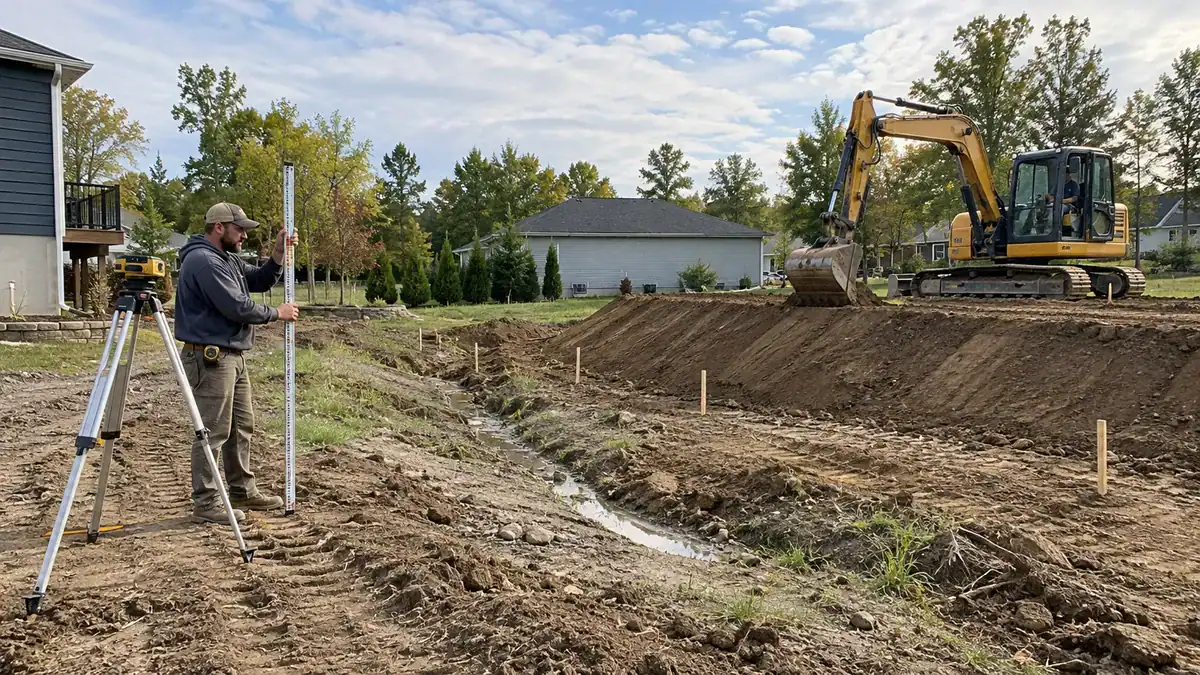
A grading estimate should define the work area, intended ground shape, soil-handling plan, and included preparation and finish work. Check that each proposal describes the same boundaries and target elevations so you are not comparing totals for different scopes.
Look for a clear account of how the crew will prepare the site and handle soil. The estimate should say whether material will be shifted within the yard, brought in, or hauled away, and whether protection for utilities, trees, walls, paving, or other features is included. It should also specify cleanup, including what happens to loose soil and debris after grading.
Confirm which surface and restoration items are included in the price. A proposal may cover shaping the ground but leave planting or lawn work for a later phase. Check explicitly for:
- Finish grading and any topsoil placement
- Seeding, sod, planting, or other landscape restoration
- Protection of existing utilities and landscape features
- Soil import, excess-soil hauling, and cleanup
Ask how the grading will align with planned patios, pathways, retaining features, and other hardscaping. Finished elevations affect how those elements meet the surrounding ground, so the estimate should show where earthwork ends and hardscape installation begins. For example, clarify whether the grading crew will prepare the base area for a patio or whether that preparation is part of the patio scope.
Compare written estimates line by line, including materials, preparation, soil handling, and finish work. If one quote includes topsoil or restoration and another does not, the headline prices are not directly comparable. Ask the contractors to explain differences in scope and materials and identify any work that is not included.
How Does Grading Work Around Your Home?
Grading around your home reshapes the ground to meet your project’s elevation, use, and water-flow goals while accounting for the foundation and existing site features. The City of San Diego defines “grade” as the ground-surface elevation and “grading” as earthwork that can include grubbing, excavation, embanking, or filling. A typical project moves from site review to earthwork and finish preparation:
- Assess the site and goals. Your planned use of the yard, existing elevations, and the relationship between your home and the surrounding landscape help establish the intended finished surface. Around a foundation, the design needs to account for planned ground elevations and how water will flow across the site.
- Plan soil movement and access. The work plan identifies where soil will be cut, placed, or removed and how crews and equipment can reach the area. Existing patios, pathways, planting, utilities, and other features can affect the work sequence and the protection needed during construction.
- Carry out the earthwork. Crews clear or protect the work area, then excavate, move, and place soil to create the planned elevations. The work needs to preserve the intended relationship between your home, nearby landscape, and any hardscape that will remain.
- Shape and prepare the finish surface. Final shaping prepares the ground for the next landscape or construction work, such as planting or hardscape installation. The finish should align with adjoining surfaces and the project’s intended contours.
Permit and plan requirements depend on the project and jurisdiction, so check local rules for your specific site. For example, Fresno County requires an engineered grading plan when proposed earth movement exceeds 1,000 cubic yards, with possible requirements for smaller projects. That county rule does not establish requirements for a Los Angeles property; San Diego has its own grading definitions and regulations.
When Does Your Site Need an Assessment?
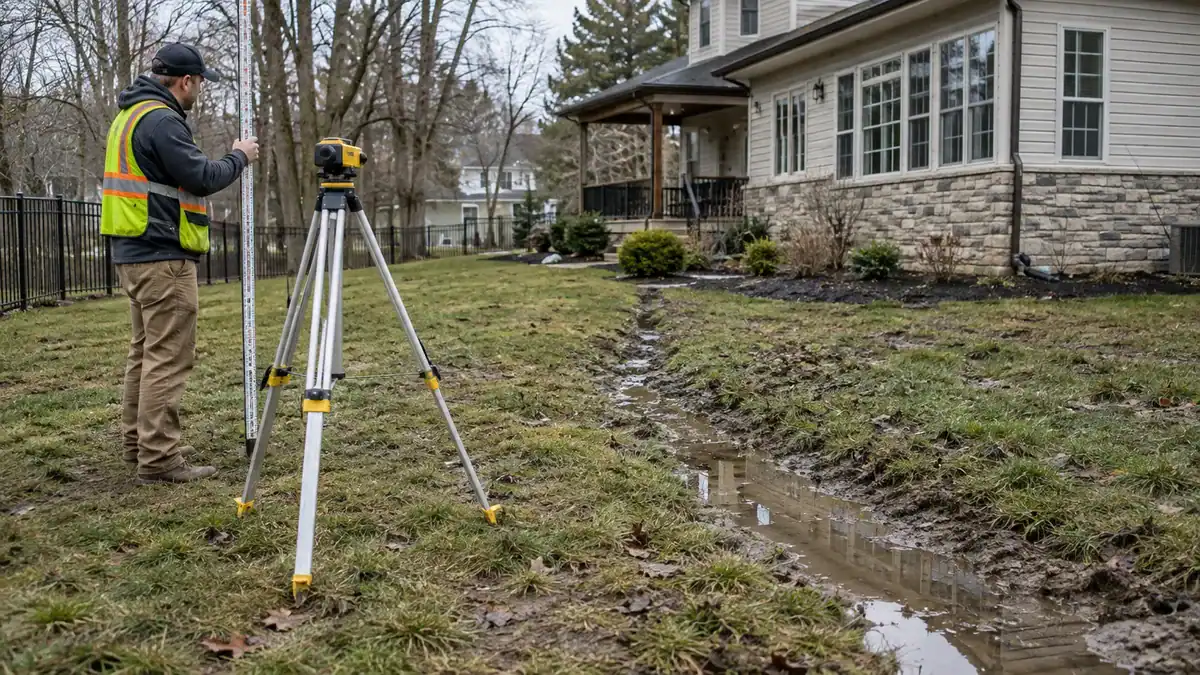
An on-site assessment is especially useful when your yard has a substantial slope, uncertain soil volumes, limited equipment access, existing improvements, or several planned landscape features. Each condition can affect the amount of earthwork and the care needed to shape the site around features that will remain.
During a site visit, you can clarify the grading area and desired finished surface, cut-and-fill needs, whether soil must be brought in or removed, and which finish items are included. Reviewing grading alongside planned features such as a patio, planting areas, or other outdoor-living installations helps define a scope you can compare across estimates.
All County Landscape-Hardscape provides landscape design, construction, and outdoor-living installations for residential and commercial clients across Los Angeles. Talk with our team about your property and project goals so your grading can align with a custom, budget-conscious plan and durable, environmentally responsible construction.
Timing depends on project scope. Smaller landscape grading projects may take as little as one day, while yard leveling averages three days to one week.
Plan Your Los Angeles Grading Project
For your Los Angeles project, first identify which city or county authority serves your property and check its grading approval requirements. Rules vary by jurisdiction. For construction stormwater, the U.S. Environmental Protection Agency requires a Clean Water Act permit when discharges come from work disturbing at least one acre, or from a smaller area that is part of a plan disturbing at least one acre.
Prepare a brief for your site assessment with your property address, any available plans, and the outdoor features you want to add or change. Note whether the work is part of a larger construction project, since that can affect which requirements apply. For a commercial property or a multi-phase remodel, include the full planned work area rather than only the first section to be graded.
An assessment can connect grading decisions to your broader landscape or hardscape design, so finished elevations and construction phases are considered together. All County Landscape-Hardscape serves residential and commercial clients across Los Angeles with landscape design, construction, and outdoor-living installations. Contact All County Landscape-Hardscape to discuss a site assessment, or explore our Hardscape Services for a project that includes patios, retaining features, or other built elements.
Frequently Asked Questions
1. Can you grade around mature trees without harming their roots?
Grading around mature trees can harm roots if excavation, added soil, or equipment compacts the ground nearby. Your plan should identify which trees will remain and account for root protection before work begins. An on-site assessment can help clarify the grading scope and protection needed.
2. Can landscape grading be phased with a patio or backyard remodel?
Landscape grading can be phased with a patio or backyard remodel when you plan the finished elevations and work sequence together. Coordinate grading with the patio footprint, surrounding surfaces, and access needs, and have each estimate specify where grading ends and patio preparation or installation begins.
3. Can you regrade your yard yourself?
You may be able to handle a small, straightforward surface adjustment yourself, but substantial regrading is more complex because soil movement, compaction, access, and finished slopes all affect the result. Work near a foundation, utilities, mature trees, or planned hardscape requires careful planning, so consider a site assessment before deciding whether to take it on.
4. Will grading change where runoff flows onto a neighboring property?
Grading can change where runoff flows, so plan the finished elevations to avoid directing water onto a neighboring property. An assessment can help account for existing slopes, your home, and planned landscape features when establishing the intended surface and water flow.
5. Is leveling a yard worth it?
Leveling a yard can be worthwhile when your planned use, such as a patio or lawn, needs a more suitable surface, but grading does not always mean making the entire yard flat. The value depends on your project goals and the earthwork required, so define the intended use and finished elevations before comparing estimates.